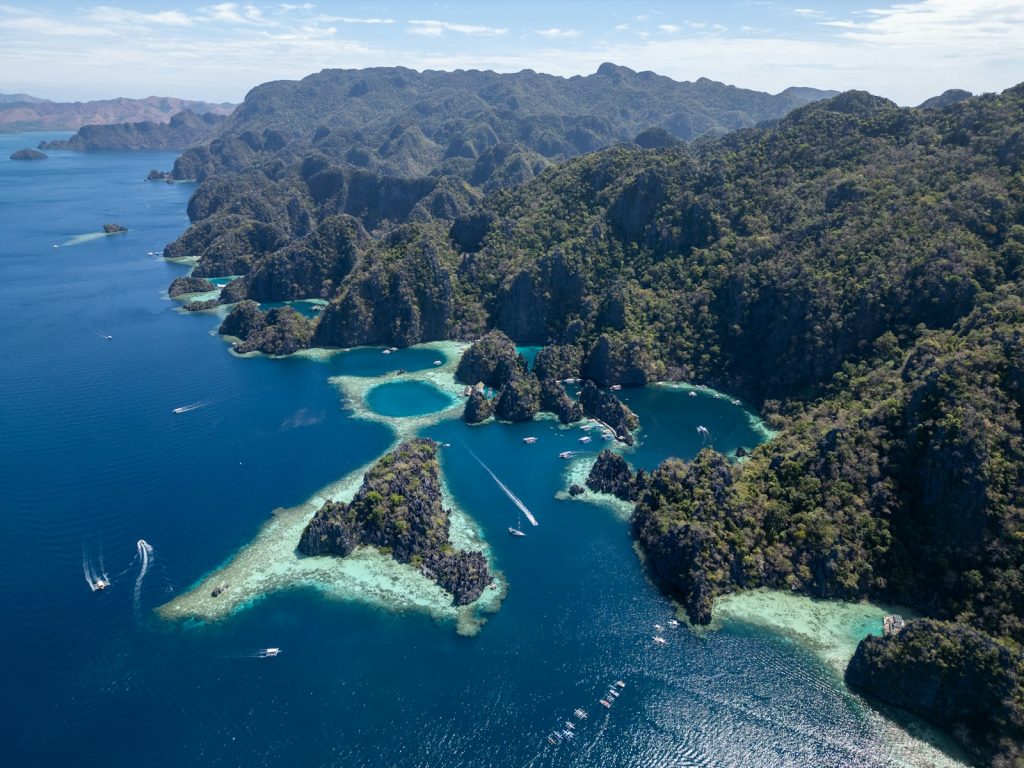
Building a private marina or jetty in Raja Ampat is legally possible but subject to a multi-layered permit regime that most investors underestimate — and a 2025 enforcement action that raised the stakes considerably. The short answer: over-water structures inside Raja Ampat’s Marine Protected Area network require approvals from at least three different government levels, a full environmental assessment in most cases, and explicit authorization from the Marine Park Authority. Dredging and coastal reclamation face near-absolute restrictions under MPA zoning rules.
This article maps the permit pathway, names the agencies, explains the dredging and reclamation constraints, and explains what the 2025 jetty demolitions signal about enforcement direction. It is information, not legal or investment advice.
Why the Question Matters More Than It Used to
For much of Raja Ampat’s tourism development history, small resorts and homestay operators built basic timber jetties with minimal formal oversight. That era is closing. The regency received a UNESCO Global Geopark designation in 2023 and a Gold Blue Park Award in 2022, both of which come with internationally monitored conservation performance benchmarks. Any visible failure to enforce coastal construction rules now creates diplomatic and reputational consequences that local government cannot ignore.
Then came 2025. Reports of unauthorized jetty demolitions — structures dismantled by enforcement teams operating under the Raja Ampat Marine Park Authority and provincial maritime authorities — circulated among operators and investors. The demolitions were part of the same enforcement wave that reviewed nickel-mining permits across the regency. Indonesia’s ESDM Ministry revoked four mining IUPs in Raja Ampat on 10 June 2025, with the stated rationale including impacts on the geopark zone and on tourist sites. The signal to any investor planning physical coastal infrastructure is clear: this is an administration prepared to remove structures that lack complete, current, and valid permits.
The MPA Framework: What It Actually Covers
Raja Ampat’s Marine Protected Area network covers approximately 13,550 km² (roughly 1,355,000 hectares) of marine area, managed by the Raja Ampat Marine Park Authority — a provincial UPTD with BLUD (public service agency) status. The broader jurisdiction area cited by the authority extends to over 2 million hectares. This is not a single zoned park with uniform rules. It is a network of seven MPAs, each with internal zoning layers.
The critical zoning split for any construction project:
- Zona Inti (Core Zone)
- Strictly protected. No extraction, no fishing, no construction of any kind, no sand or coral removal. A jetty in a core zone has no realistic permit pathway.
- Zona Pemanfaatan (Utilization / Tourism Zone)
- Controlled commercial use is permitted subject to marine park authority authorization and environmental compliance. Most existing resort infrastructure sits in these zones. This is where a permit application for a jetty or mooring structure is theoretically viable.
- Buffer and Rehabilitation Zones
- Varying restrictions; generally permit-required for any physical intervention.
Where exactly a proposed structure falls within that zoning framework is the first question any applicant must answer — and it requires consulting the current Zonasi map held by the UPTD in Waisai, not a third-party broker’s site plan.
Who Issues the Permits: The Three-Agency Stack
There is no single counter where you file for a Raja Ampat jetty permit. The approval pathway runs through at least three overlapping authorities, and the sequencing matters.
1. The Marine Park Authority (UPTD BLUD KKP Raja Ampat)
Any structure, mooring, or physical intervention inside the MPA boundary requires Marine Park Authority clearance. This authority sits at the provincial level (West Papua Maritime and Fisheries Service), not the regency level. It issues the izin pemanfaatan kawasan konservasi (conservation-area utilization permit) and oversees compliance. For over-water structures, researchers, tour operators, and resort developers all route through this office.
2. The Ministry of Marine Affairs and Fisheries (KKP — Kementerian Kelautan dan Perikanan)
At the national level, coastal and marine spatial management falls under KKP’s authority. The RZWP3K (Regional Coastal and Small Islands Management Plan) governs permissible activities by zone across West Papua’s coastal waters. Any investment that involves over-water construction, coastal reclamation, or significant mooring infrastructure must align with the RZWP3K spatial designation for that location. A proposed marina that conflicts with the spatial plan designation faces rejection at this level regardless of what local-level approvals a developer might obtain first.
3. Raja Ampat Regency Government (Pemerintah Kabupaten)
The regency issues the PBG (Persetujuan Bangunan Gedung), the building permit that replaced the old IMB. For over-water structures in Raja Ampat, the PBG process is complicated by the need to demonstrate alignment with both the regency’s own RTRW (spatial plan) and the marine spatial plan. The regency also administers tourism business licensing (TDUP/izin usaha pariwisata) and the site-specific land and coastal-use confirmation (KKPR — Kesesuaian Kegiatan Pemanfaatan Ruang). Both must typically be in place before a PBG is issued.
Investors planning anything beyond a simple wooden landing dock should engage a licensed Indonesian notaris and a Sorong-based legal counsel familiar with West Papua spatial regulations before approaching any of these agencies. The agencies’ requirements interact in ways that can stall a project for years if approached in the wrong sequence.
Dredging and Reclamation: The Near-Hard Stop
This is where the regulatory picture turns most restrictive. Across the Raja Ampat MPA network, the following interventions are effectively prohibited without rare, high-level approval:
- Dredging to deepen navigation channels or create marina basins
- Land reclamation — filling shallow water to create land area for a marina
- Removal of sand, coral, or rock from the marine environment
- Mangrove clearing for jetty access or coastal development
- Construction on living reef
These restrictions are not merely policy preferences. They are baked into the conservation-area management rules that govern every MPA under the national marine conservation framework, and they are reinforced by the RZWP3K spatial designations for West Papua’s coastal waters. A full-scale marina with dredged basin, reclaimed hardstand, and sea walls — the kind of structure the word “marina” typically implies — is not a realistic prospect inside or immediately adjacent to any of Raja Ampat’s conservation zones. The environmental baseline alone makes any AMDAL (environmental impact assessment) for such a project politically and technically very difficult to obtain.
What is more achievable: a timber or composite-decking jetty of moderate length in a designated tourism utilization zone, built on piles without disturbing the seabed beyond the pile footprint, with an AMDAL or UKL-UPL (the smaller-scale environmental management document, appropriate for lower-impact projects) in place. These structures exist throughout Raja Ampat’s operational resorts and represent the realistic upper bound for most private investors.
Environmental Assessment: AMDAL vs. UKL-UPL
Whether a project triggers a full AMDAL or the lighter UKL-UPL depends on scale, location, and the current threshold regulations. As a general guide:
| Document | Threshold trigger (general) | Approximate timeline | Cost range (indicative) |
|---|---|---|---|
| UKL-UPL | Smaller-scale, lower-impact projects; tourism structures below AMDAL thresholds | 3–6 months | IDR 50–200 million (project-specific) |
| AMDAL | Larger-scale, higher-impact; projects in sensitive ecosystems like MPAs often require this | 6–18 months | IDR 200 million–several billion (project-specific) |
Any project inside an MPA boundary that involves over-water construction is likely to be assessed at the AMDAL level, regardless of scale, because the sensitivity of the receiving environment elevates the risk classification. Confirm the applicable threshold with the relevant DPLH (Environmental and Forestry Service) office in Raja Ampat or at the provincial level in Sorong/Manokwari. Costs and timelines above are indicative ranges only — they vary significantly by project type, assessor, and current regulatory interpretation.
The 2025 Enforcement Signal: Demolitions and What They Mean
The jetty demolitions reported in 2025 are a significant data point for any investor considering coastal construction. Several structures — reportedly built without complete MPA authorization or in zones where construction was not permitted — were removed by enforcement teams. The political backdrop matters here: the same period saw Indonesia revoke four nickel-mining permits in Raja Ampat after Greenpeace Indonesia documented environmental damage and public protests reached the Presidential Palace. The government’s messaging was explicit about protecting the geopark designation.
This does not mean enforcement is uniform or that all unauthorized structures face immediate removal. Indonesia’s regulatory enforcement has historically been uneven. But the direction is unmistakable: the regency and provincial government are under pressure from international conservation bodies, domestic environmental NGOs, and the tourism industry itself to demonstrate that the UNESCO Geopark status means something on the ground. Structures built without valid permits are now a documented enforcement risk, not merely a compliance irregularity.
For an investor acquiring an existing resort or marine-tourism business, the practical implication is straightforward: verify the permit status of every over-water structure as a mandatory component of due diligence. Ask for the UPTD utilization permit, the PBG, the AMDAL or UKL-UPL, and the KKPR confirmation. If any of those documents are missing or expired, price that gap into your acquisition terms or walk away until the seller completes them.
If you are planning to acquire an existing asset and need help structuring your due-diligence questions, plan your approach with our concierge — we can help you identify the right questions to ask before you engage Indonesian legal counsel.
The Approval Pathway in Sequence
For an investor who has identified a site in a tourism utilization zone and wants to build a jetty or mooring structure, the logical sequence runs broadly as follows. This is a framework, not a legal prescription — the exact steps depend on project specifics, and professional guidance is essential at each stage.
- Spatial confirmation: Confirm the proposed site’s zoning under the RZWP3K (provincial marine spatial plan) and the regency RTRW. Obtain KKPR confirmation through OSS (Online Single Submission).
- Marine Park Authority pre-consultation: Approach the UPTD BLUD in Waisai before filing formal applications. Understand whether the specific location is within a permissible zone and what the authority’s current conditions are for over-water structures.
- Environmental screening: Determine whether the project triggers AMDAL or UKL-UPL. Commission the appropriate document through a licensed AMDAL consultant registered with the regional DPLH.
- Marine Park utilization permit: File the formal izin pemanfaatan kawasan konservasi application with the Marine Park Authority, supported by the environmental document and the spatial confirmation.
- PBG (building permit): Apply to Raja Ampat Regency public works/spatial planning office, supported by all prior approvals, site plans, and structural drawings.
- TDUP / tourism business license update: If the structure is part of a tourism business, ensure the tourism operating license is updated to reflect the new infrastructure.
Realistically, the full sequence from initial spatial confirmation to a valid PBG for an over-water structure in Raja Ampat takes 12–36 months for a well-prepared applicant. Projects that skip steps or approach agencies in the wrong order can stall indefinitely.
Adat Land and Coastal Rights: The Layer Beneath the Government Permits
Government permits are necessary but not sufficient. Much of Raja Ampat’s coastline — including the foreshore and shallow-water zones that jetties and moorings occupy — is subject to customary (adat) rights held by local clans (marga/keret). These rights are recognized under Indonesia’s Constitution (Article 18B(2)) and protected by Papua Special Autonomy Law (Law 21/2001 as amended by Law 2/2021).
A jetty built on clan-managed coastline without adat consent, community benefit-sharing, and ideally a formal land/coastal use agreement with the relevant clan creates social-licence risk that government permits cannot resolve. Disputes have stalled and in some cases ended tourism projects in Raja Ampat and broader Papua. The principle of FPIC — Free, Prior, and Informed Consent — is the accepted international standard for this type of engagement, and it is increasingly referenced in Indonesian environmental law and conservation frameworks.
Obtaining meaningful adat consent is not a box-checking exercise. It requires patient engagement with clan leaders, clarity about what is being built, how long it will operate, and what the community will receive in return. Projects that rush this step have consistently created problems that prove far more expensive than the engagement would have been.
Mooring Buoys: The Lower-Impact Alternative
For investors primarily concerned with safe vessel access rather than a full marina facility, mooring buoys — anchored in sand rather than on live reef — represent a substantially lower regulatory burden than fixed jetty structures. The Marine Park Authority has an existing framework for mooring authorizations in tourist zones, and many dive resorts in Raja Ampat operate under this model. Mooring systems do not trigger PBG requirements. They require Marine Park Authority authorization and must comply with the no-anchoring-on-coral rules that apply throughout the MPA, but the overall pathway is meaningfully simpler and faster.
If boat access is the primary operational need, the mooring-plus-tender model warrants serious consideration before committing to a fixed jetty project.
Practical Takeaways for Investors
None of the following is advice; it is a summary of the regulatory logic described above.
- Fixed over-water structures require permits from three government levels. Missing any one of them creates enforcement exposure.
- Dredging and reclamation are near-impossible to permit inside the MPA zone. Marina concepts that require them are not viable.
- The 2025 demolition actions are a credible enforcement signal, not an isolated event.
- Acquiring an existing resort means inheriting the permit status — or permit gaps — of every over-water structure on the property. Verify before signing.
- Adat consent is a parallel track to government permitting, not a substitute for it. Both must be in place.
- Mooring buoys offer a faster, lower-risk path to vessel access for most tourism operations.
Ready to plan your due diligence visit to Raja Ampat? Reach out via our contact page or send us a WhatsApp message — we connect investors with the local legal counsel and marine-park specialists who understand this permit landscape from the inside.
Frequently Asked Questions
Who exactly issues the permit for a private jetty inside the Raja Ampat MPA?
No single agency issues the permit. You need authorization from the Raja Ampat Marine Park Authority (UPTD BLUD, a provincial body) for any structure inside the MPA boundary, a spatial-use confirmation (KKPR) and building permit (PBG) from Raja Ampat Regency, and alignment with the West Papua coastal spatial plan (RZWP3K) administered at the provincial and national level. An environmental document — AMDAL or UKL-UPL depending on scale — is required before the Marine Park Authority or regency will process construction applications.
Is dredging to create a marina basin permitted anywhere in Raja Ampat?
Effectively no, for practical purposes. Dredging within any MPA zone is prohibited without rare high-level approval, and the conservation sensitivity of Raja Ampat’s waters makes obtaining such approval for a commercial marina basin essentially non-viable under current policy. Investors should treat dredging as off the table and design accordingly — shallow-draft vessels and mooring systems are the realistic operating model.
What did the 2025 jetty demolitions actually mean for future investors?
They signaled that the Marine Park Authority and provincial enforcement teams are willing to remove structures that lack valid, current MPA authorization — even structures that have been standing for years. The context was a broader enforcement effort tied to the UNESCO Geopark designation and the nickel-mining permit revocations. For investors, the practical implication is that permit gaps in an acquisition target are no longer just administrative issues; they are demolition risk.
How long does it realistically take to get approval for a resort jetty in Raja Ampat?
A well-prepared applicant working in a designated tourism utilization zone should budget 12 to 36 months from initial spatial confirmation to a valid building permit. Projects involving AMDAL (rather than the lighter UKL-UPL) are at the longer end of that range. Delays are common when the spatial-plan confirmation step is skipped or when the marine park pre-consultation is not completed before formal applications are filed.
Can I use a mooring buoy instead of a fixed jetty to access my resort by boat?
Yes, and for most tourism operations it is the more practical approach. Mooring buoys anchored in sand within a designated tourism utilization zone require Marine Park Authority authorization but do not trigger the building permit (PBG) or environmental-assessment requirements that a fixed over-water structure does. Many operating dive resorts in Raja Ampat use the mooring-plus-tender model precisely because it is faster to authorize and has a lower environmental footprint than a fixed jetty.