Information, not advice. Raja Ampat Investment Intelligence is an independent editorial guide. This page is general information, not financial, legal, tax, or investment advice, and we never promise returns. Indonesian regulations and customary (adat) land rights are complex and change — verify everything with licensed Indonesian counsel, a notaris, and customary-law experts before any decision. Where useful we can introduce you to vetted independent partners; we may receive a referral fee, at no cost to you.
Foreigners cannot buy land outright in Raja Ampat — or anywhere in Indonesia. Full freehold title, known as Hak Milik, is constitutionally reserved for Indonesian citizens. A foreign individual who somehow acquires Hak Milik is legally required to relinquish it within one year, after which the state can claim it. That single fact resolves the most common question investors ask, but it is only the start of the story. What you can do, legally and durably, involves a specific set of statutory title types that sit below Hak Milik in the Indonesian land hierarchy — and in Raja Ampat, those titles interact with layers of customary (adat) clan ownership and Marine Protected Area zoning that no Bali-generic legal guide will prepare you for.
The Indonesian Land Title Hierarchy: A Primer
Indonesia’s land law traces back to the Basic Agrarian Law (UUPA, Law No. 5/1960), which unified colonial-era land rights under a national framework rooted in customary (adat) law principles. The Omnibus Law era introduced PP 18/2021, which updated title durations and some procedural rules without scrapping the underlying architecture. The Ministry of Agrarian Affairs and Spatial Planning / National Land Agency (ATR/BPN) administers title registration.
The titles relevant to foreign investors, ranked from strongest to weakest, are:
- Hak Milik (HM) — Freehold ownership
- Perpetual, fully transferable. Reserved for Indonesian citizens only. Not available to PT PMA companies, foreign individuals, or foreign-owned entities. If a foreigner acquires HM through any mechanism, they must relinquish it within one year or face state forfeiture.
- Hak Guna Bangunan (HGB) — Right to Build
- Grants the holder the right to construct and own buildings on land owned by the state or another party. A PT PMA (foreign-owned company incorporated under Indonesian law) can hold HGB. This is the most common title used for resort and commercial development projects. See duration table below.
- Hak Guna Usaha (HGU) — Right to Cultivate
- Designed for large-scale agricultural, plantation, or fishery enterprises over state land. Minimum area applies. Relevant for aquaculture or large-scale agri-tourism schemes, not for typical hotel or eco-resort development. A PT PMA can hold HGU.
- Hak Pakai (HP) — Right to Use
- A use right over state land, local-government land, or land owned by another party (including Hak Milik holders). Foreign individuals residing in Indonesia can hold Hak Pakai over state land for a residential property; PT PMA can hold it for commercial use. Weaker than HGB in terms of development rights, but legally recognized and registerable at BPN.
- Hak Sewa (HS) — Contractual Lease / Right to Rent
- A purely contractual arrangement — the holder pays the land owner to use land. Not registered as a title at BPN in the same way. Duration and renewal are governed by the lease agreement itself, not by statute. This is the mechanism behind the 15-year renewable lease structures commonly cited in Raja Ampat island deals. It is legally valid but offers the least statutory protection if the owner or their heirs later dispute it.
Duration Regimes: UUPA vs PP 18/2021 — and the Discrepancy You Should Know
If you read different legal guides and find conflicting numbers for how long an HGB lasts, you are not misreading them. Two distinct duration frameworks exist in the regulatory literature, and they do not agree:
| Title Type | Traditional / UUPA Regime | Post-PP 18/2021 Regime | Maximum Total |
|---|---|---|---|
| HGB | 50 yrs initial + 30 yr renewal | 30 yrs + 20 yr extension + 30 yr renewal | 80 yrs (both regimes) |
| HGU | 60 yrs + 35 yr renewal | 35 yrs + 25 yr extension + 35 yr renewal | 95 yrs (both regimes) |
| Hak Pakai | 45 yrs + 25 yr renewal | 30 yrs + 20 yr extension + 30 yr renewal | 70 yrs (UUPA) / 80 yrs (PP 18/2021) |
The total maximums are similar but the phased structure differs — and the practical implication is that you may need to go through a formal extension or renewal process partway through the title’s life. These processes require payment of fees, ongoing regulatory compliance, and in some cases approval from the relevant government authority. Neither regime guarantees automatic renewal; renewal depends on the holder meeting the land use obligations tied to the title.
West Papua practice — verify locally: The table above reflects national statutory text. How ATR/BPN offices in West Papua (Sorong) and Raja Ampat Regency actually process HGB applications, what documentation they require for a PT PMA, and which duration regime their current administrative templates follow is something you must confirm with a licensed notaris (pejabat pembuat akta tanah, PPAT) who operates in the jurisdiction. National rules and local administrative practice do not always match, particularly in remote eastern provinces where cadastral capacity is limited.
What a PT PMA Can — and Cannot — Hold in Raja Ampat
A PT PMA (Perseroan Terbatas Penanaman Modal Asing) is an Indonesian limited liability company with foreign shareholding. It is the standard legal vehicle for foreign tourism investment and is incorporated under Indonesian law with OSS registration via Kementerian Investasi/BKPM. The PT PMA is a legal Indonesian entity, not a foreign company, which is why it can hold certain land titles that foreign persons cannot.
A qualifying PT PMA engaged in tourism, eco-resort, or marine recreation can hold:
- HGB — for buildings and development on state land or on land leased from a Hak Milik holder (often via a long-term agreement with a local Indonesian owner or, in Raja Ampat, with an adat clan that holds the underlying right);
- HGU — for relevant large-scale cultivation activities;
- Hak Pakai — for use rights over state or private land;
- Hak Sewa — pure contractual lease arrangements with any land owner.
A PT PMA cannot hold Hak Milik under any circumstances. This is not a technicality that business consultants can engineer around. It is constitutional.
For investors asking about hak guna bangunan Raja Ampat specifically: HGB is registerable and grants clear development rights, but it must be over land that is properly identified in the cadastral system with a clear state or registered private owner. Much of Raja Ampat’s coastal and island land is not in this category — it is unregistered customary land (see next section), which means obtaining HGB requires first resolving the land’s legal status, which adds significant time, cost, and negotiation.
The Leasehold Structures Actually Used in Raja Ampat Island Deals
Most foreign-accessible land deals in Raja Ampat are structured as long-term leases rather than registered title transfers. The 15-year renewable lease repeatedly cited in island listings — such as the Yeben Kecil Island deal at around EUR 250,000 / USD 290,000 for a 40,000 m² coastal site within a nature-reserve zone — reflects the practical market standard, not an arbitrary number.
Why 15 years rather than the full 30-year HGB initial term? Several reasons converge:
- Nature-reserve and MPA zoning constraints. Much of Raja Ampat sits within a ~13,550 km² Marine Conservation Area managed under a network of seven MPAs. Nature-reserve zone land often permits only low-impact bamboo or wooden structures, and the conservation authority’s tolerance for long-term development commitments may be limited.
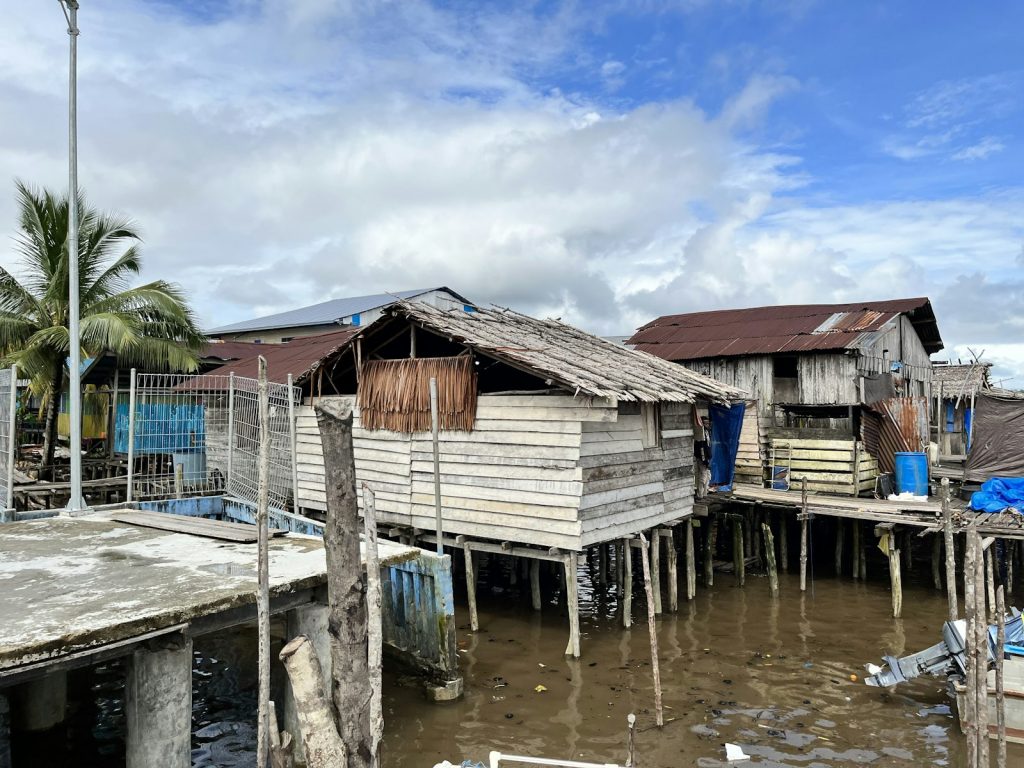
- Unregistered adat land. Where the underlying land is clan-owned and unregistered, the parties cannot execute a proper BPN-registered HGB. The deal reverts to a contractual use agreement — effectively a Hak Sewa — with the clan or family holding the customary right. Fifteen years is a negotiated compromise between the investor’s desire for tenure security and the clan’s caution about long-term alienation of land their children will also inherit.
- Market convention. Fifteen years with a renewal option has become the reference point that sellers and buyers both understand. Deviation requires explanation and extra negotiation time.
For leasehold land in West Papua that falls outside protected zones and over state or registered land, longer registered tenures are achievable. But this requires clear cadastral identification, which in Raja Ampat remains the exception rather than the rule on small islands and coastlines.
If you are evaluating a specific lease-based deal, the critical due diligence questions are: Who signed the lease? Do they have authority to bind the clan? Is the lease notarized? Has the arrangement been cross-checked against BPN cadastral records for overlapping state concessions? And — critically — has there been any community consultation beyond the individual signatory?
Ready to explore a specific site? Our team can help orient your due diligence questions before you retain local counsel. Plan your trip and reach out via WhatsApp — we are happy to point you toward the right questions to ask.
Adat Land: The Layer Beneath the National Title System
Indonesia’s national land law acknowledges customary (adat) land rights under Constitution Article 18B(2) and within the UUPA framework. In Raja Ampat, this acknowledgment has real weight. Coastal areas, small islands, reefs, and interior forest are largely held under hak ulayat — the collective customary territorial right of Papuan clans (marga, keret) that predates and operates alongside the national title system.
Several features of adat land in Raja Ampat define what is and is not possible for any investor:
Land is clan-owned, not individually owned. A clan elder who signs a lease agreement may genuinely believe they have authority to do so. But customary governance in Papua often distributes rights across clan members, and agreements signed by one representative can be challenged by others — including by younger members who were not consulted, by rival clans asserting overlapping territorial claims, or by successors after the signatory dies.
Sale is effectively impossible. Hak ulayat land cannot be permanently alienated under adat norms, and the customary norm aligns with the practical reality that clans have no mechanism to vote to permanently divest their collective inheritance. What looks like a sale is almost always a long-term use agreement, regardless of what the document says.
BPN cadastral maps frequently do not capture customary boundaries. A BPN official might tell you that a given island has no registered title and is therefore state land available for HGB application. That may be technically correct under the national registration system, but if a clan has exercised continuous customary use of that island for generations, they hold hak ulayat regardless of whether it appears in the cadastre. Projects that proceed on the basis of BPN status alone, without engaging the customary owners, face the risk of blockade, permit challenges, and community conflict that no court order can quickly resolve.
Papua Special Autonomy adds a further layer. Law 21/2001 (as amended by Law 2/2021) gives Orang Asli Papua (indigenous Papuan people) specifically protected status over land and resources. It enables Perdasus (Special Regional Regulations) on customary rights and obliges local government to protect hak ulayat through consultation and benefit-sharing. Investors who bypass this layer — even unintentionally — expose their projects to legal challenge, permit revocation, and reputational damage. Documented cases of resort and surf-camp projects in Papua hitting clan disputes, access-blocking, and forced renegotiation exist across the region, even where investors held written agreements.
The practical implication for structuring is that the most durable arrangements in Raja Ampat typically combine a notarized lease agreement, clan consensus documented through a proper musyawarah (community deliberation) process, and an ongoing benefit-sharing structure — employment quotas, community funds, royalties — that gives the clan a continuing stake in the project’s success rather than a one-time payment that later looks inadequate. These are not just ethical recommendations. They are what determines whether a project survives its first decade.
Why Nominee Structures Are Illegal — and the Precise Risk
A nominee structure — where a foreigner finances the purchase of land or a company, but registers ownership in the name of an Indonesian citizen acting as a front — is one of the most persistent and dangerous misconceptions in Indonesian investment. This is not a grey area.
Article 10(1) of Law 25/2007 on Investment explicitly prohibits domestic investors from acting as nominees or proxies for foreign capital in circumvention of foreign-investment rules. The consequences the law specifies are severe: dissolution of the company, forfeiture of assets, and criminal penalties. Trust deeds and side letters purporting to give the foreign investor beneficial ownership are not enforceable in Indonesian courts — they are themselves evidence of the illegal arrangement.
The specific risks stack up as follows:
- Asset forfeiture. Land or company assets registered under a nominee arrangement can be confiscated if the nominee relationship is uncovered. You have no enforceable legal claim on assets you do not legally own.
- Nominee turns adversarial. If the Indonesian nominee decides to sell the land, encumber it as loan collateral, or simply assert full ownership, Indonesian courts will side with the registered title holder. The nominee bears the title; you hold an unenforceable side agreement.
- No remedy in court. Because the underlying arrangement is illegal, you cannot sue to enforce it without exposing yourself to prosecution.
- Criminal exposure. Both the foreign investor and the Indonesian nominee can face criminal liability under Law 25/2007. This is not theoretical; enforcement has intensified under the OSS risk-based licensing regime that now creates an audit trail for foreign investment structures.
Consultants who present nominee arrangements as a common practice are telling you something about how common the mistake is, not about its legality. The correct path is a properly structured PT PMA holding HGB or Hak Pakai, combined with the appropriate clan or landowner agreements documented by a licensed notaris (PPAT) in the relevant jurisdiction. It is slower and more expensive upfront. It is also the only structure that survives regulatory scrutiny.
What the Title Structure Looks Like in Practice
A typical Raja Ampat eco-resort investment that a foreign investor can legally execute follows a structure roughly like this:
- Incorporate a PT PMA in Indonesia, registered under the appropriate KBLI tourism code (e.g., 55199 for non-star accommodation, 93119 for diving/marine recreation, or a combination), with total investment plan above IDR 10 billion excluding land and buildings. Minimum paid-up capital guidance has been revised — some advisors cite IDR 2.5 billion (reported as effective circa October 2025); others still use IDR 10 billion. Confirm current in-force BKPM regulation with your incorporation counsel before proceeding.
- Identify and clear the land. Engage a local land consultant and PPAT to verify BPN cadastral status, identify the customary owners through a community mapping process, and conduct FPIC (free, prior, informed consent) consultation with the relevant marga or keret.
- Execute a notarized lease or Hak Pakai agreement with the land-right holder — either the state (through BPN) if it is properly state land, or the customary owners documented through a recognized adat process — granting the PT PMA right of use or right to build for the agreed duration.
- Register the right at BPN (ATR/BPN West Papua / Sorong office) to obtain a certificate. Unregistered rights are harder to defend and cannot be mortgaged or transferred cleanly.
- Obtain environmental clearance — AMDAL (full Environmental Impact Assessment) for larger projects, or UKL-UPL (Environmental Management and Monitoring Effort) for smaller ones — before any ground is broken. Inside Raja Ampat’s MPA network, this requires coordination with the Raja Ampat Marine Park Authority (UPTD BLUD).
- Obtain building permit (PBG), replacing the old IMB system, along with any marine-specific permits for jetties, moorings, or over-water structures.
Each step takes time, and the total timeline from initial land identification to permitted ground-breaking in Raja Ampat should be budgeted in years, not months — particularly if the land involves adat ownership that needs proper community process. Investors who accept an existing permit package from a seller should verify each permit’s current validity, not take the seller’s word for it.
Conservation Zoning and What It Means for Land Use Rights
Holding a valid HGB or Hak Pakai over a piece of coastal Raja Ampat land does not mean you can build whatever you like on it. The land title governs who has the legal right to use the land; the spatial planning (RTRW, RZWP3K) and conservation zoning govern what activities are permitted there.
Raja Ampat’s ~13,550 km² marine conservation area is structured around several zones. In core no-take zones (zona inti), no fishing, no extraction, no resort construction, and no habitat damage is permitted. Tourism utilization zones (zona pemanfaatan wisata) allow low-impact tourism activity with Marine Park Authority permits. In practice, any coastal development project in Raja Ampat will need to demonstrate it sits within the correct spatial-use classification — this comes through a KKPR (spatial-use confirmation) from the relevant government authority before a PBG building permit can issue.
The Yeben Kecil Island deal cited earlier explicitly acknowledges the nature-reserve zone status of the site: bamboo and wooden structures only, a 15-year lease only. That is not a seller’s whim — it reflects the actual zoning constraint on what can be built there. An investor who signs a lease on a zona-inti parcel and then plans to build a concrete resort is not only breaking conservation rules; they are building on a title that cannot support the intended use.
Raja Ampat’s UNESCO Geopark and the 2025 Mining Reversal
Any discussion of land rights in Raja Ampat is incomplete without acknowledging the political economy of land use that surrounds it. In June 2025, the Indonesian government announced the revocation of four nickel mining permits covering Kawe, Manuran, Manyaifun, Batang Pele, and Waigeo islands, following a Greenpeace Indonesia report and public protests. The announcement was made at the Presidential Palace by the Energy Minister. Twelve of sixteen active nickel permits were reported to fall inside the UNESCO Global Geopark boundaries designated in 2023.
Importantly, subsequent investigations by NGOs including Earth Insight and Wallacea found no published revocation decrees and no evidence of administrative finality — the gap between political announcement and legal execution remains unresolved as of mid-2026. One permit (PT Gag Nikel on Gag Island, part-owned by state miner Antam) was not revoked, and operations reportedly resumed in September 2025.
The relevance to land rights is direct: permit revocation, re-issuance, and overlapping concession claims — mining versus tourism versus conservation versus adat — are active risks in Raja Ampat’s land market, not hypothetical ones. A piece of coastal land might carry a tourism use right, a forestry concession, a mining exploration permit, and an unregistered adat claim all pointing at the same coordinates. Checking BPN status alone does not surface these overlaps. Comprehensive due diligence requires BPN check, ESDM (mining) check, Ministry of Forestry (kawasan hutan) check, and community consultation — in parallel.
Practical Guidance for Structuring Entry
The framework above is a map of the rules, not a substitute for the licensed Indonesian notaris (PPAT), legal counsel, and local Papuan customary-law advisor you need before signing anything. What it should do is give you the vocabulary and structural awareness to ask better questions of those advisors.
Key questions to bring to your first meeting with local counsel:
- Has this parcel been cadastrally surveyed and registered with ATR/BPN? If not, what is the process to regularize it before a PT PMA can hold HGB?
- Who are the customary owners? Has there been an FPIC process with full clan representation, not just the elder or individual who introduced the deal?
- Does the site fall within any MPA zone, conservation area, forestry zone, or mining concession? Obtain KKPR confirmation and a ministerial-systems cross-check.
- If this is an existing resort-for-sale with all permits in a PT company: What permits exist? When do they expire? Have LKPM, tax, and environmental-monitoring obligations been met? What are the PT’s liabilities?
- What is the current ATR/BPN West Papua practice for HGB durations under PP 18/2021? Is the local office applying the 30+20+30 structure, or a different schedule?
When you are ready to move from research to structured conversations with local counsel and community representatives, our team can help you orient the visit. Plan your due-diligence trip or reach out via WhatsApp to discuss your project parameters — we work with investors at the scoping stage, not just after the deal is signed.
Frequently Asked Questions
Can foreigners buy land in Raja Ampat outright?
No. Hak Milik (freehold) is legally reserved for Indonesian citizens under the Basic Agrarian Law (UUPA, 1960). A foreigner who acquires freehold must relinquish it within one year or face state forfeiture. Foreign investors access land through a PT PMA company that holds HGB (right to build) or Hak Pakai (right to use), or through long-term leasehold agreements (Hak Sewa) structured with the land owner — typically an Indonesian landowner or an adat clan in Raja Ampat’s case.
What is the standard lease duration for island land in Raja Ampat?
Fifteen years with a renewable option is the commonly cited market standard in Raja Ampat island deals — including the publicly listed Yeben Kecil Island lease at around EUR 250,000 / USD 290,000 for a 40,000 m² nature-reserve site. This reflects a combination of conservation-zone constraints, unregistered adat land that cannot support longer registered titles, and market convention. Longer registered HGB tenures (up to 80 years total under PP 18/2021) are possible where land is clearly state or registered private land with proper BPN documentation, but that describes a minority of coastal Raja Ampat parcels.
Is a nominee arrangement — putting land in an Indonesian citizen’s name — a legal way for foreigners to hold land?
No. Article 10(1) of Law 25/2007 on Investment explicitly prohibits Indonesian nationals from acting as nominees for foreign capital in circumvention of investment rules. The stated penalties are dissolution of the company, forfeiture of assets, and criminal sanctions for both parties. Side letters and trust deeds are not enforceable in Indonesian courts and serve as evidence of the illegal structure. The legally correct vehicle is a properly incorporated PT PMA holding registered title rights — slower to set up, but the only structure that survives scrutiny.
What is the difference between HGB and Hak Pakai for a PT PMA resort project?
Hak Guna Bangunan (HGB) grants the right to construct and own buildings on the land for the title’s duration — it is the preferred title for physical development projects. Hak Pakai (right to use) grants use rights without the same level of development authority; it is often used over state land for non-construction purposes or for foreign individual residential use. For a resort or eco-lodge development, HGB is generally the more appropriate title. Both are registerable at ATR/BPN and both can be held by a qualifying PT PMA. The specific title available on a given Raja Ampat parcel depends on how the underlying land is classified in the national cadastral system — and much Raja Ampat land is not yet formally classified at all.
How does adat land (tanah ulayat) in Raja Ampat affect my ability to obtain an HGB?
Significantly. Hak ulayat is the customary territorial right of Papuan clans, recognized under Indonesia’s constitution and amplified by Papua Special Autonomy Law (Law 21/2001, amended by Law 2/2021). Coastal and island land in Raja Ampat is often unregistered adat land — held collectively by a marga or keret — rather than state land that ATR/BPN can freely grant HGB over. Before a PT PMA can obtain HGB on such land, the adat rights need to be formally acknowledged, and a proper consent and benefit-sharing process (FPIC) with the relevant clan must be documented. Without this social license, projects can be blocked, challenged, or renegotiated by dissenting clan members regardless of what the written agreement says. Adat consultation is not optional paperwork; it is the foundation that determines whether a project runs for thirty years or falls apart in five.